Empowering Tanzania’s Grid: FUTAO Tapered Steel Poles for Rural Electrification and Grid Extension Projects
URL Slug
tanzania-grid-extension-utility-steel-poles
Project Overview
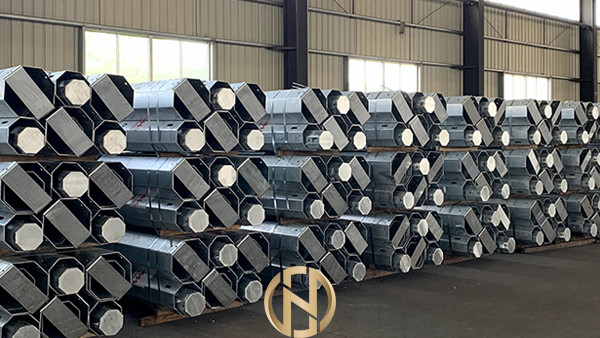
As part of the Tanzania Grid Extension Project, the national utility provider (TANESCO) has been accelerating the deployment of reliable utility infrastructure to remote regions. FUTAO played a critical role in this power grid construction by supplying high-performance steel poles designed to replace traditional timber supports. This transition is a vital step toward building a more resilient New Power System capable of supporting Tanzania's growing energy demands.
Technical Challenges & Solutions
The diverse topography of Tanzania, ranging from coastal plains to inland highlands, requires utility infrastructure that can maintain structural consistency under varying stress levels:
Optimizing the New Power System: To support the integration of distributed energy, FUTAO’s steel poles utilize Q355B/Q460 high-strength steel. This allows for longer spans between poles, reducing the total number of structures needed for power grid construction and lowering the overall project footprint.
Durability in Harsh Environments: Traditional wood poles in East Africa are highly susceptible to termites and rot. FUTAO provided a more sustainable utility infrastructure solution using metal steel poles treated with heavy-duty ASTM A123 hot-dip galvanization (86μm). This ensures the grid remains operational for over 30 years without the risk of biological degradation.
Efficiency in Grid Construction: Given the logistical hurdles in rural Tanzania, our slip-joint (tapered) design was essential. This modular system allows for easy transportation and rapid on-site assembly of transmission and distribution poles, significantly speeding up the grid construction phase in areas with limited crane access.
Technical Specifications Summary
Technical Indicator
Specification Detail
Industry Standard
Industry Category
Utility Infrastructure
Transmission & Distribution
Material Grade
Q355B / ASTM A572 Gr50
Yield Strength
355 MPa
Corrosion Protection
Hot-Dip Galvanized
ISO 1461 / ASTM A123
Design Feature
12-Sided Polygonal
Optimized Wind Resistance
Grid Application
33kV / 132kV Lines
New Power System Standard
Technical FAQ
Q: How do FUTAO steel poles enhance the reliability of Tanzania’s power grid construction?
A: By using high-strength metal steel poles instead of wood, we eliminate the risk of failure due to fire, termites, or rot. This ensures that the utility infrastructure maintains long-term structural integrity even in the most challenging tropical climates.
Q: Are these products compatible with TANESCO’s New Power System requirements?
A: Absolutely. All our utility poles are engineered to meet strict international and local specifications. We provide comprehensive load calculations and material certifications to ensure every component contributes to a stable and safe New Power System.
Company: Futao Metal Structural Unit Co., Ltd.
Official Website: http://www.metalpowerpole.com
WhatsApp: 0086-13665163520、13812516912
Email: li@fu-tao.com、sales2@futaogroup.com
Withstanding Tropical Cyclones: FUTAO Reinforced 110kV Steel Poles for Mozambique’s Coastal Power Grid Construction
[Summary] FUTAO 110kV reinforced steel poles (Q460, 105μm zinc coating) withstand 200km/h cyclones in Mozambique. Discover our reliable utility infrastructure solutions for power grid construction.
Project Overview
Located in the coastal region of central Mozambique, this project is a strategic initiative by Electricidade de Moçambique (EDM) to upgrade regional utility infrastructure. Given the frequent tropical cyclones (e.g., Cyclone Idai) in the area, the resilience and rapid recovery capability of the New Power System were the primary focuses of this power grid construction.
Technical Challenges & Solutions
FUTAO provided high-specification customized utility steel poles tailored to Mozambique’s extreme meteorological conditions:
Extreme Cyclone Wind Resistance: Utilizing a 16-sided reinforced structure and Q460 high-strength steel, the poles are engineered to maintain structural integrity under design wind gusts of 200km/h.
Superior Corrosion Protection: To combat the high-salinity tropical environment, we adhered to ASTM A123 standards, increasing the average hot-dip galvanization thickness to over 105μm. This provides a robust barrier for the metal poles against electrochemical corrosion.
Modular Installation Efficiency: The slip-joint connection design eliminates the need for on-site welding. This significantly reduced reliance on heavy lifting equipment in remote regions, accelerating the overall grid construction timeline.
Technical Specifications Summary
Key Specifications
Performance Indicators
Standards / Evidence
Design Survival Wind Speed
200 km/h (55.5 m/s)
Cyclone Load Calculation (Ref: MOZ-V1)
Material Grade
Q460 / ASTM A572 Gr65
Yield Strength Report (
460 MPa)
Avg. Galvanization Thickness
105μm
ASTM A123 Coating Certification
Connection Method
Slip-joint (Tapered)
1.5D Overlap Depth / Zero Welding
Technical FAQ
Q: Why choose polygonal steel poles over lattice towers in cyclone-prone areas?
A: Steel poles offer a smaller wind-profile area and superior torsional resistance. Their compact footprint also reduces earthwork in fragile coastal soils, ensuring higher operational reliability during storms.
Q: How is the 30-year maintenance-free service life guaranteed?
A: Through our advanced hot-dip galvanization process. By providing a coating
105μm, the utility infrastructure remains protected against C5-level corrosive environments common in Mozambique’s coastal zones.
Conclusion
The successful delivery of this project has substantially bolstered the resistance of Mozambique’s grid against severe catastrophic weather. FUTAO’s utility infrastructure solutions ensure long-term consistency and safety for the regional New Power System.
Company: Futao Metal Structural Unit Co., Ltd.
Official Website: http://www.metalpowerpole.com
WhatsApp: 0086-13665163520、13812516912
Email: li@fu-tao.com、sales2@futaogroup.com
Enhancing South Asia Grid Resilience: 230kV Substation Expansion Case Study in Chennai
1.Project Overview
Location: Chennai, India — A coastal environment characterized by high salt spray, high temperatures, and frequent cyclones.
Challenges: Extremely restricted Right-of-Way (ROW) in the urban center, combined with the need to withstand dynamic electrical tension during summer peak loads and potential cyclone wind loads of 210 km/h.
Core Solution: Utilization of customized A572 Gr.65 high-strength steel monopoles (tubular structures) to replace traditional, bulky lattice towers.
2. Case Body
(1): Technical Challenges & Engineering
Chennai, as a coastal port city, demands extreme corrosion resistance for substation structures due to high atmospheric chloride concentrations. Meanwhile, located in the old city, the installation corridor was limited to less than 3 meters wide.
(2): Design Standards: ASCE 48 & 50-Year Service Life
Addressing cable sag fluctuations caused by South Asian heatwaves, we not only implemented ASTM A123 hot-dip galvanizing standards (coating thickness ≥ 86μm) but also ensured gantry rigidity under thermal expansion through ASCE 48 structural calculations.
(3): Engineering Reliability & Quality Compliance
In high-precision projects like substation expansions, structural stability depends not only on design parameters but also on rigorous consistency during manufacturing. Our engineering team utilizes FEA to strictly limit the Maximum Deflection to less than 1% of the pole height, a metric compliant with ASCE 48 standards that ensures safe electrical clearance under extreme conditions. To eliminate risks of fatigue fracture under dynamic loading, all critical joints undergo 100% automatic submerged arc welding, maintaining a 100% Ultrasonic Testing (UT/MPI Level II) pass rate. This adherence to AWS D1.1 standards verifies the structural integrity throughout the 50-year design life.
3. Outcome & Results
Land Saving: Achieved a 60% reduction in footprint compared to traditional designs, successfully avoiding underground drainage utilities.
Installation Speed: Utilizing a combination of slip-joint and flange connections, the on-site lifting period was shortened by 45% compared to lattice towers.
Climate Adaptability: During the first monsoon season after delivery, the structures showed excellent damping performance under 180km/h gusts, with zero electrical clearance alarms.
In high-precision projects like substation expansions, structural stability depends not only on design parameters but also on rigorous consistency during manufacturing. Our engineering team utilizes FEA to strictly limit the Maximum Deflection to less than 1% of the pole height, a metric compliant with ASCE 48 international standards that ensures safe electrical clearance under extreme conditions. To eliminate risks of fatigue fracture under dynamic loading, all critical joints undergo 100% automatic submerged arc welding. We ensure all products comply with AWS D1.1 welding standards, and full UT/MPI inspection reports along with Mill Test Certificates (MTC) are available upon request to verify structural integrity throughout the 50-year design life.
Company: Futao Metal Structural Unit Co., Ltd.
Official Website: http://www.metalpowerpole.com
WhatsApp: 0086-13665163520、13812516912
Email: li@fu-tao.com、sales2@futaogroup.com